
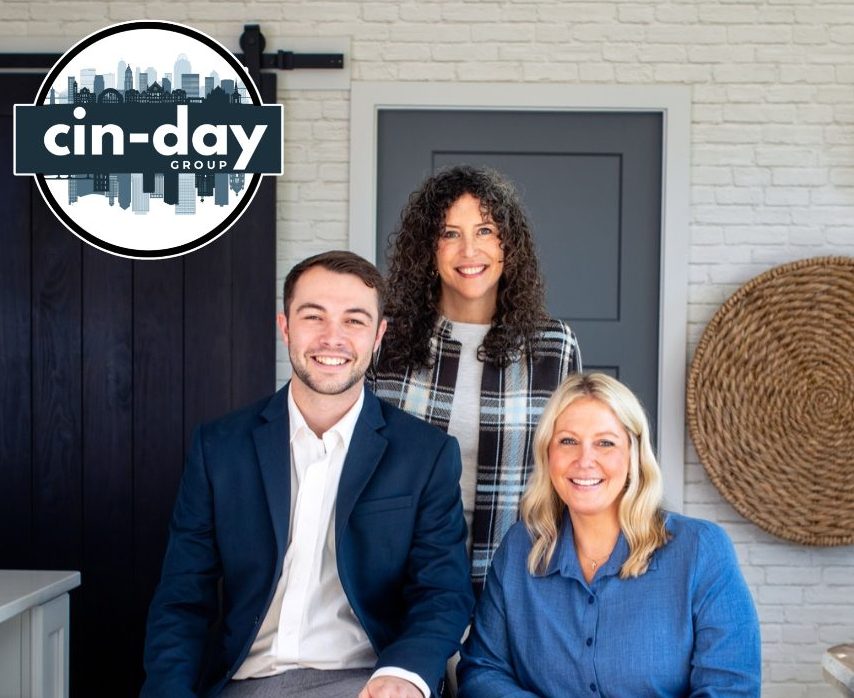
The Cin-Day Group
Cincinnati & Dayton Real Estate Agents
Your Real Estate Journey Starts Here
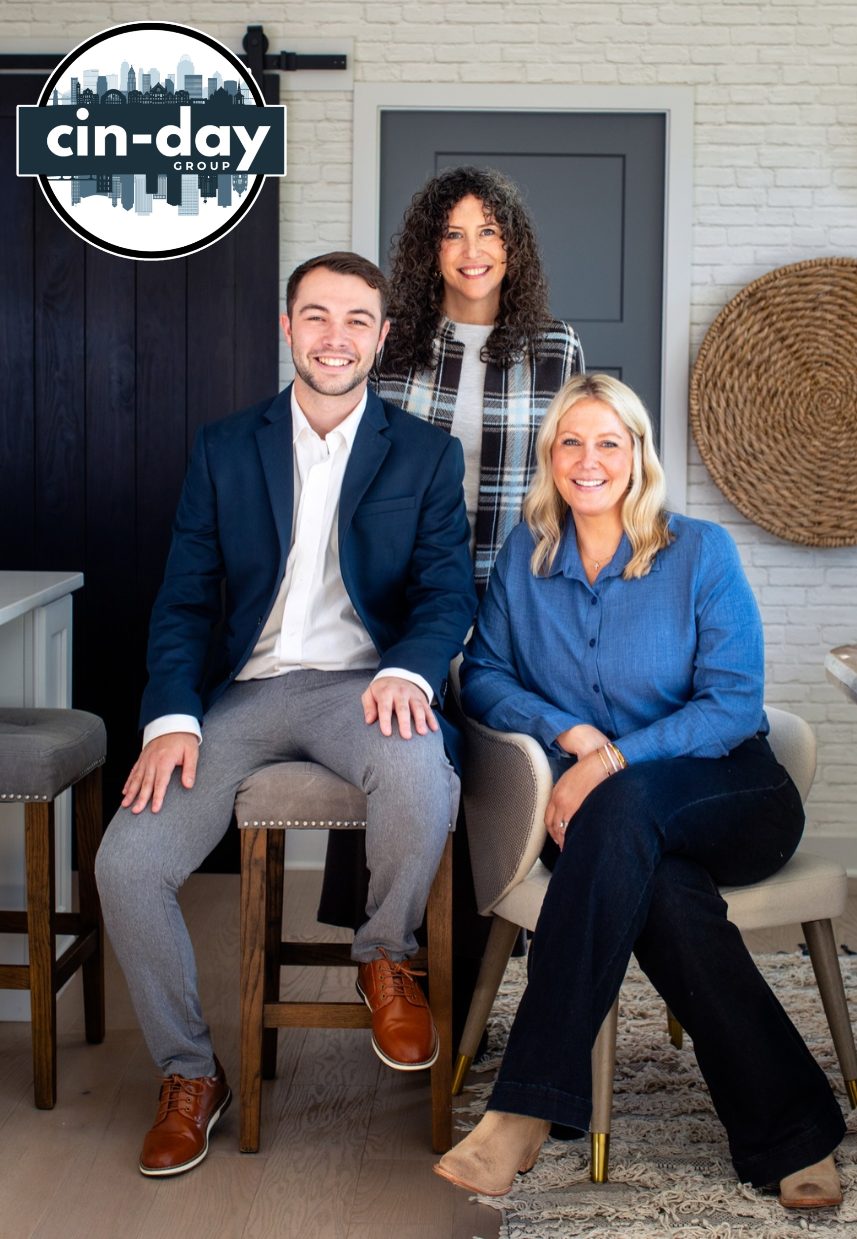
The Cin-Day Group at Coldwell Banker Heritage helps clients buy and sell homes across Southwest Ohio, including Cincinnati’s Hyde Park, Oakley, and Mt. Lookout neighborhoods, Mason and Deerfield Township, West Chester and Liberty Township, Monroe, Bellbrook and Sugarcreek Township, Beavercreek, and Greater Dayton. Our real estate team works with first-time homebuyers, buyers using VA or FHA financing, military families relocating to Wright-Patterson Air Force Base (WPAFB), and homeowners selling luxury properties. Whether you’re ready to tour homes or preparing to list yours, we’ll guide you through each step to closing.
The Cin-Day Group
Cincinnati & Dayton Real Estate Agents
Your Real Estate Journey Starts Here
The Cin-Day Group at Coldwell Banker Heritage helps clients buy and sell homes across Southwest Ohio, including Cincinnati’s Hyde Park, Oakley, and Mt. Lookout neighborhoods, Mason and Deerfield Township, West Chester and Liberty Township, Monroe, Bellbrook and Sugarcreek Township, Beavercreek, and Greater Dayton. Our real estate team works with first-time homebuyers, buyers using VA or FHA financing, military families relocating to Wright-Patterson Air Force Base (WPAFB), and homeowners selling luxury properties. Whether you’re ready to tour homes or preparing to list yours, we’ll guide you through each step to closing.
How We Can Help
From first showing to keys in hand.
Pricing, marketing, and negotiation that gets you moved.
Articles on buying, selling, or planning a future move.
Areas We Serve
Neighborhoods We Serve in Southwest Ohio
We serve clients as far north as Troy, Dayton, Oakwood, Kettering, Beavercreek, Bellbrookand Sugarcreek Township, and Centerville - to the communities in between Dayton and Cincinnati like Springboro, Lebanon, Mason, West Chester, and Loveland - to the urban neighborhoods of Hyde Park, Oakley, Mariemont, and Columbia Tusculum. If it's in the counties of Hamilton, Cleremont, Warren, Butler, Montgomery or Greene, we serve it!
Get school information, community videos, and neighborhood resources for 80 Cincinnati towns and neighborhoods.
Everything you need to know about Dayton communities, from schools and local resources to video tours.
Learn about 18 Cincinnati attractions, with links out to their websites.
Learn about 11 Dayton attractions, with links out to their websites.
Frequently Asked Questions
Get answers to common questions about the home buying process
From an accepted offer, most Ohio home purchases close in about 30–45 days. If you count the house hunt beforehand, the whole process usually runs 2–4 months.
What drives the timeline:
- Financing (the biggest factor). Underwriting, the appraisal, and final loan approval usually take 30–45 days. FHA and VA loans can run a bit longer because of their appraisal and property requirements. Cash deals can close in as little as 1–3 weeks.
- Inspections and repair negotiations. These typically take the first 7–14 days after the offer is accepted.
- Title work. The title company searches for liens and other issues and prepares the deed. Ohio closings are handled by title companies, not attorneys, which keeps things moving.
- Your search time. This depends on inventory, your budget, and how competitive your target area is (Mason vs. Hyde Park, for example).
What can slow it down: a low appraisal, problems found in the inspection, missing loan paperwork, title issues, or a buyer who has to sell another home first.
Pre-qualification is a quick, informal estimate from a lender of how much you might be able to borrow. It’s based on income, debts, and assets you report yourself, and it often uses only a soft credit check or none at all. It can take minutes, but nothing has been verified, so sellers don’t put much weight on it.
Pre-approval is a conditional commitment from a lender for a specific loan amount. You submit documents (pay stubs, W-2s or tax returns, bank statements), and the lender runs a hard credit pull and checks everything. It takes a day to a few days and usually comes with a letter that’s good for about 60–90 days.
Why it matters: a pre-approval shows sellers you’re a serious, verified buyer. That makes your offer stronger, especially in competitive markets, and many listing agents expect one with every offer. A pre-qualification is fine for early budgeting, but get pre-approved before you start making offers.
Beyond the down payment, a buyer should plan on roughly 3–5% of the purchase price for upfront costs, plus a cushion for ongoing expenses.
Upfront costs:
- Closing costs, about 2–5%. These cover lender fees, the appraisal, title insurance and settlement fees, recording fees, and prepaid items (homeowners insurance and property taxes going into escrow).
- Home inspection, about $400–$700. Add more for radon, sewer scope, or termite inspections.
- Earnest money. This is usually 1–2% and gets credited toward the purchase at closing, but you need the cash available up front.
- Moving costs. Anywhere from a few hundred dollars to several thousand.
After closing:
- Repairs, maintenance, and furnishing. A common rule is 1–2% of the home’s value per year for maintenance.
- HOA fees, utility deposits, and set-up costs, where they apply.
- An emergency reserve. Many advisors suggest 3–6 months of housing payments.
Ohio property taxes vary a lot by school district, so it’s worth checking the specific tax bill when comparing homes in different areas. On a $350,000 home, for example, a buyer should plan on about $10,000–$17,500 above the down payment for closing and move-in costs.
It depends, and here’s how we’ll decide:
- Fix what you know will come up in a buyer’s inspection. Leaky faucets, broken outlets, missing GFCIs, roof or HVAC issues, water damage. These scare buyers or get negotiated off the price anyway, usually at a premium.
- Do low-cost, high-impact cosmetic work. Fresh neutral paint, deep cleaning, decluttering, new light fixtures or hardware, curb appeal (mulch, trimmed shrubs, front door paint). These typically return more than they cost.
- Skip big renovations. Sellers rarely recoup a full kitchen or bath remodel, and buyers often want to choose their own finishes. It’s usually better to price the home accordingly.
- Let the comps decide. Compare recent sales of similar homes nearby, updated and not. If the price difference is greater than the cost of the update, it’s likely worth doing.
Our Testimonials
Ready to start your journey?
Get in touch today for a free consultation. We're here to answer your questions and guide you every step of the way.

 © 2026 Dayton Area Board of Realtors. All rights reserved. Information deemed to be reliable but not guaranteed. The data relating to real estate for sale on this website comes from Dayton Area Board of Realtors and the Broker Reciprocity Program. Real estate listings held by brokerage firms other than Dayton Ohio MLS (DTON) - 48 - OH are marked with the BR logo and detailed information about them includes the name of the listing brokers. Listing broker has attempted to offer accurate data, but buyers are advised to confirm all items.

The data relating to real estate for sale on this web site comes in part from the Broker Reciprocity™ program of the Multiple Listing Service of Greater Cincinnati. Real estate listings held by brokerage firms other than Coldwell Banker Heritage are marked with the MLS ™ logo (the small logo to the left) and detailed information about them includes the name of the listing brokers. The information herein is furnished by the property owner in good faith but is subject to verification by the purchaser. Neither the MLS, the Broker, the Agent guarantee or warranty the correctness therein. All information is dated and is subject to change at any time. Copyright 2026, MLS of Greater Cincinnati, Inc. All rights reserved.
© 2026 Coldwell Banker Heritage - (937) 429-4500.
Equal housing opportunity. An equal opportunity company.

A real estate team with Coldwell Banker Heritage
Team office: 1311 Hamilton Lebanon Road, Monroe, OH 45050
Team phone: (513) 307-9451
Phone: (937) 429-4500
Licensed Real Estate Broker
State of Ohio
