Facebook
 X
 Pinterest
 Copy Link
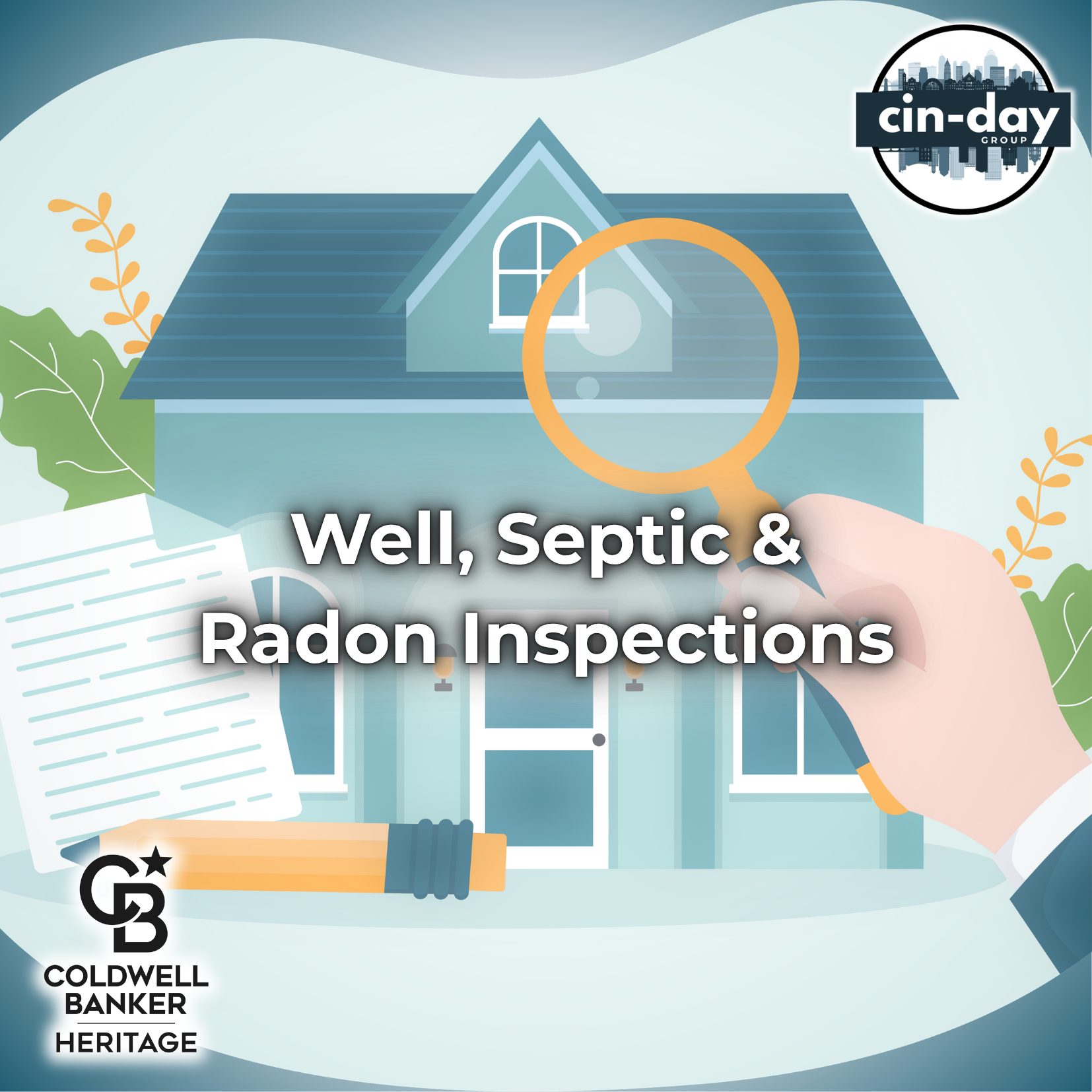
Well, Septic and Radon Inspections: When You Need Them in Southwest Ohio
A standard home inspection covers a lot, but it doesn’t cover everything. If you’re buying a home with a private well, a septic system, or a basement (which is many homes around here), you’ll likely want a few extra tests. Here’s when each one makes sense.
Radon: test almost every home
Radon is an odorless, invisible gas that comes up naturally from the soil. It’s the leading cause of lung cancer among non-smokers, and much of Southwest Ohio has high radon potential. You can’t tell by looking at a house or by what the neighbors’ test showed.
- When to test: for nearly every home purchase, especially homes with basements or crawl spaces.
- What the results mean: the EPA recommends fixing a home at 4.0 pCi/L or higher.
- The good news: a radon mitigation system is a common, fixable item. It’s often something buyers and sellers negotiate.
In Ohio, radon testers and mitigation contractors must be licensed by the Ohio Department of Health, so ask your inspector for their license.
Well water: test before you buy
If the home has a private well instead of city water, nobody tests that water for you. Before closing, have it tested for at least:
- Coliform bacteria and E. coli
- Nitrates
- Other items common to the area, like iron, hardness, arsenic or lead
It’s also smart to have the well’s flow rate checked to make sure it delivers enough water for your household. You’ll find more private wells in rural parts of Warren, Butler, Clermont, Greene and Preble counties.
Septic: know what you’re getting
A septic system replacement can cost tens of thousands of dollars, so this is not the place to save money. A septic inspection typically includes locating the tank, pumping it, checking the levels, and looking for signs of failure in the leach field.
Ask the seller for:
- Pumping and repair records
- The system’s age and location
- Any permits or operation records from the local health district
Ohio doesn’t require a septic inspection at every sale, but some local health districts have their own rules. Your agent and inspector can tell you what applies.
Timing matters
These tests often need to be scheduled separately from your general inspection, and lab results can take several days. Build them into your inspection period so you have time to review the results and negotiate if needed.
Thinking about a home outside the city?
Country living in Southwest Ohio comes with more space, more privacy, and a few more things to check. We’ll help you know what to ask. Call The Cin-Day Group at 513-307-9451.
 © 2026 Dayton Area Board of Realtors. All rights reserved. Information deemed to be reliable but not guaranteed. The data relating to real estate for sale on this website comes from Dayton Area Board of Realtors and the Broker Reciprocity Program. Real estate listings held by brokerage firms other than Dayton Ohio MLS (DTON) - 48 - OH are marked with the BR logo and detailed information about them includes the name of the listing brokers. Listing broker has attempted to offer accurate data, but buyers are advised to confirm all items.